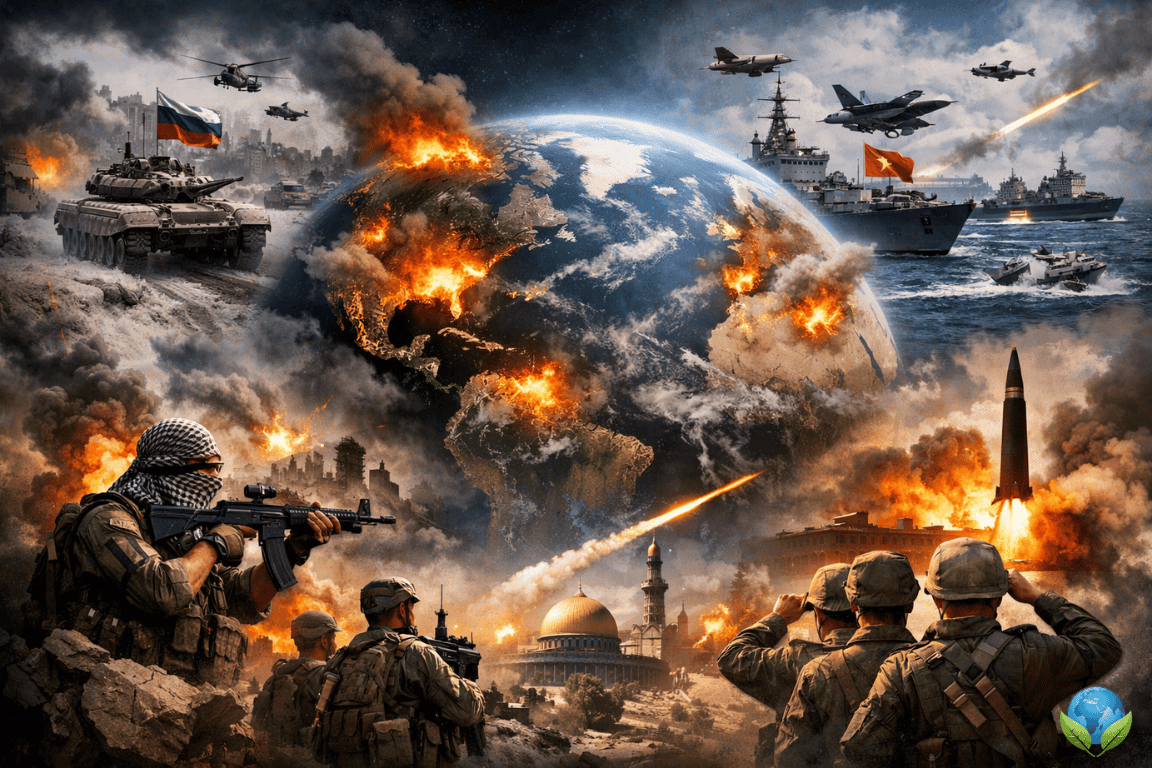
5 Geopolitical Hotspots Pushing the World Toward a Global Conflict
The global landscape today is more fragile than it has been in decades. Beneath the surface of economic growth and technological progress lies a web of rising tensions, power struggles, and unresolved disputes. These geopolitical hotspots are not isolated—they are deeply interconnected, meaning a crisis in one region can quickly ripple across the globe.
While the world has avoided a full-scale global war since 1945, the risks are steadily increasing. Strategic rivalries, resource competition, military buildups, and ideological differences are creating pressure points that could escalate if not carefully managed. Understanding these regions is essential—not just for policymakers, but for businesses, investors, and everyday citizens who are impacted by global stability.
Let’s explore five of the most critical flashpoints shaping the future of international peace and security.
⚓ 1. South China Sea – A High-Stakes Maritime Power Struggle
The South China Sea has become one of the most contested and strategically important regions in the world. Multiple nations including China, Vietnam, the Philippines, Malaysia, Brunei, and Taiwan—claim parts of this vital waterway, making it a hotspot for geopolitical friction.
At the center of the dispute is China’s expansive claim over nearly the entire sea, often referred to as the “nine-dash line.” This overlaps with the territorial waters of neighboring countries and challenges established international maritime laws.
🚢 Why It Matters
This isn’t just about territory it’s about control over one of the world’s most important economic corridors. Nearly one-third of global trade flows through these waters, making it essential for global supply chains and energy transportation.
Additionally, the region is believed to hold vast reserves of oil and natural gas, along with some of the richest fishing grounds in the world. These resources are critical for both economic growth and national security in the region.
⚔️ Rising Military Tensions
In recent years, the situation has intensified. China has built artificial islands and equipped them with military infrastructure, including airstrips and missile systems. In response, other nations—and especially the United States—have increased their military presence, conducting operations to ensure freedom of navigation.
This growing military activity increases the risk of accidental clashes, where even a small incident could spiral into a larger conflict.
🌐 Global Impact
A conflict in the South China Sea wouldn’t stay regional for long. It would disrupt global trade, increase energy prices, and destabilize financial markets worldwide. Given how interconnected today’s economies are, the consequences would be felt across continents.